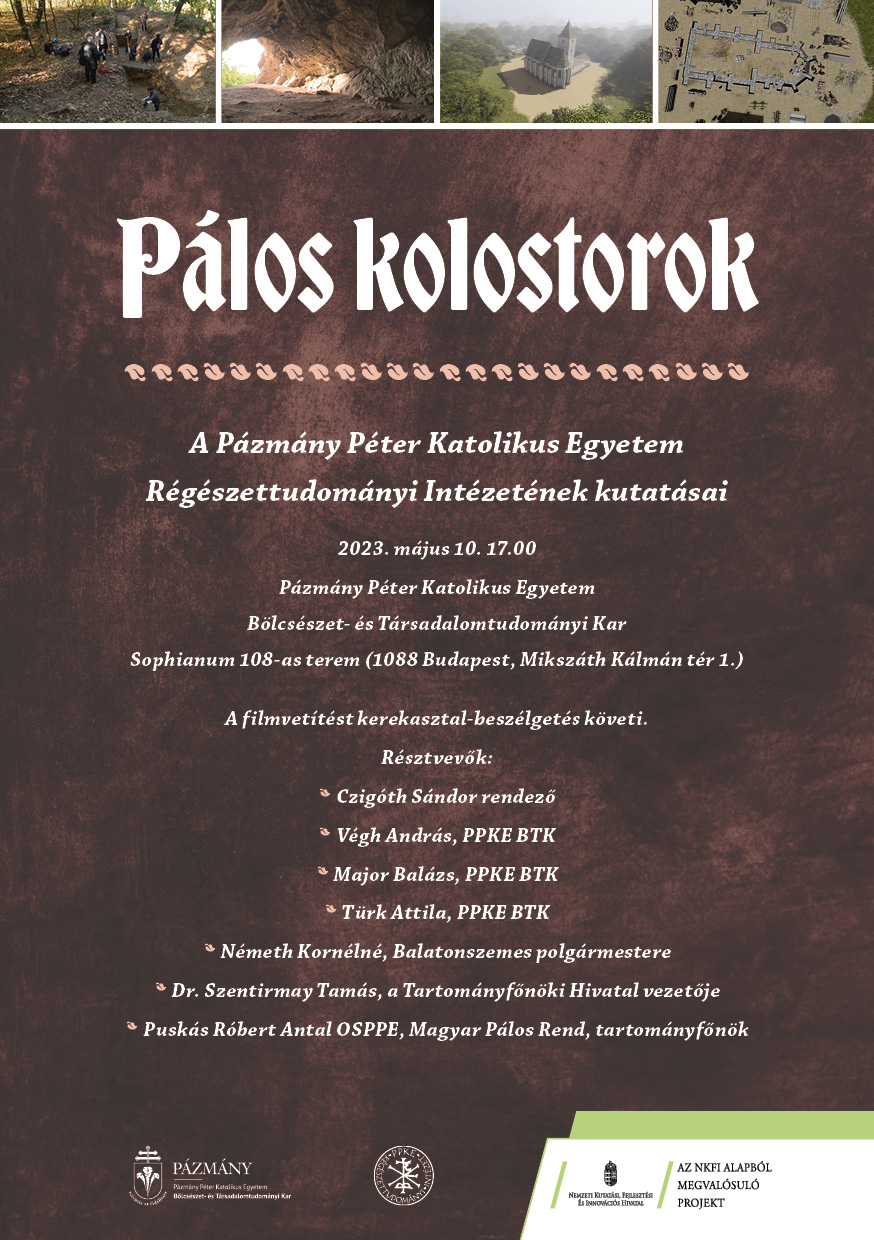
The ruins of the monastery located in the forest above Balatonszemes had long been known, but they were first described as an archaeological site with scholarly rigor by Tamás Guzsik in the 1970s, when he attempted to determine the layout of the church and its adjoining buildings.
As our former colleague, the late Dr. András Végh—head of the Medieval Department of our Institute and a native of Balatonszemes—was closely connected to the site, we gladly undertook the task of its systematic archaeological excavation.
During the annual excavation campaigns, typically lasting two weeks, almost the entire area of the church has now been uncovered. In situ wall sections, floor remains, collapsed wall structures, and carved stone elements have been brought to light. Several of our students have already completed their BA and MA degrees based on the analysis of the finds recovered here, and the stone material is also of considerable art historical importance.
In addition to excavating the church, we place strong emphasis on the non-invasive investigation of the monastery’s surroundings. The late medieval Pauline monastery—once accompanied by workshops, economic buildings, and a fishpond created by damming a nearby spring—still holds many exciting research opportunities, offering insight into the everyday life of a hermit community buried under 600 years of oblivion.
The research project, ongoing since 2014, is the longest-running domestic excavation project of our Institute. It is currently led by the students of Dr. András Végh: Adrienn Papp and Ágoston Takáts.
The popularity of the excavation—usually held over two weeks in late July and early August—is demonstrated by the fact that many participants return year after year, often even after graduating as professional archaeologists.
The excavation is carried out with the support of the Municipality of Balatonszemes. Through the knowledge gained, we aim to create a memorial site worthy of both the village and the Pauline Order.
Dr. Adrienn Papp – excavation director
Ágoston Takáts – archaeologist
Photos →